
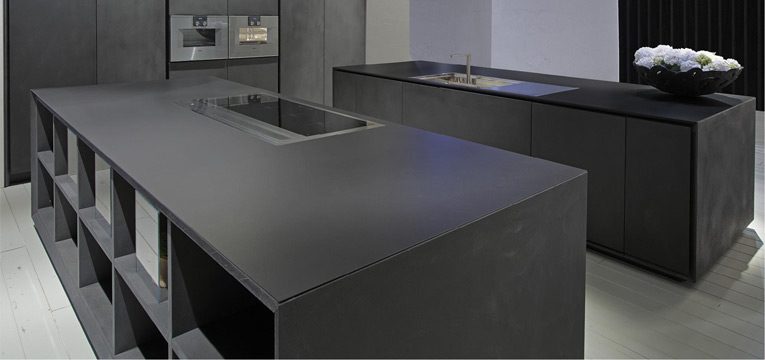
Always wanted a dark kitchen? Here’s how to pull it off!
What type of kitchen is recognized and synonymous of elegance? Without a doubt, that would be one with dark tones. It’s not always easy to venture into using dark colors for the kitchen, but, depending on how they are used, darker tones can add an incredible luxe and sophistication to a space like a kitchen. It’s all about how you do it, because, unlike lighter color schemes, they can be overbearing in certain spaces if not done right.
What color to go with?
First of all, you have to decide what color you want to use as your main dark. Dark doesn’t necessarily mean black, though black is a definitely the darkest dark! However, you can really go dark with any color you want: dark red, dark green, dark brown, even a dark grey. What you choose will depend on what you want the final look and feel to be. What do some of these colors suggest, though? Lets talk about that first.
Black
The darkest of all neutrals, black is a very interesting color for a kitchen. It is the epitome of refinement and adds a whole lot of drama! Perks include that it hides messes and that it needs little help to look stunning. Just adding a few pops of color here and there, or contrasting it with white or other neutrals will be enough to make it look complete. Trés chic!

Kitchen ONE in Lava Stone
Brown
Brown is the color of the earth and, for that reason, we associate this color with nature. Don’t confuse a dark, rich brown with a lighter creamy one. A deep brown drips finesse and “old world” charm, while a pale brown can lack in the personality department. A much warmer option than black, brown can be used in a wide variety of styles from a vintage country home to an ultra-sleek NYC apartment. It’s all about the finish and the style.

Realization in New York, LINE kitchen in oak.
Find out more about clay finishing: https://blog.rifra.com/en/search/clay
Find out more about our wood products: http://www.rifra.com/en/materiali/legni.aspx
Grey
A beautiful dark grey gives out a calm, serene vibe that black lacks. Black is all about creating a scene, while grey is sophisticated and has a presence without having to be talked about. It’s timeless, blending perfectly with any style, becoming the backdrop to more important things. Grey can be natural and warm, or cold and industrial. The materials you use, the finish and complimentary décor will determine the final look.
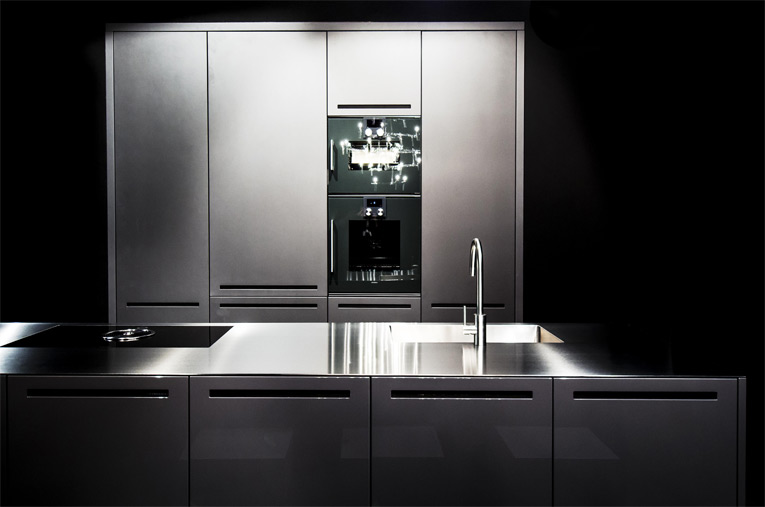

Kitchen ZERO lacquered in glossy grey
After deciding what color you are going to use as your main dark, you are going to have to decide where to use it. Cabinets? Floor? Ceiling? Details? Maybe a feature wall? If you are not sure, make sure that you have an expert, or someone you trust, to brainstorm with, because pulling of a dark kitchen is not quite as simple as making an all-white kitchen look great.
Perhaps the easiest option is to go with dark cabinets. Since they usually take up the most space in your kitchen, they can become a statement piece and you can work the rest of the décor around them.
How to pull it off
There are a couple of things to keep in mind when going dark in the kitchen other than the main dark you end up choosing and where you are going to use it. You have to think of textures and contrasting or complimentary colors. Here are a few things to think about:
Balance
Going completely dark is a big statement, but it can be done successfully. If you don’t want to go that route, a suggestion is to balance the dark with lighter colors. White is a big one here. White will look good with any dark color, and will probably offer the most sophisticated look. If that’s not your cup tea either, you might want to consider using complimentary colors to your dark hue. Choose a yellow or a blue and play with details or a feature wall to break the monotony of the dark and give the space some visual interest.

Light
A very important aspect of choosing darker colors for any space is the natural light available. While you can successfully pull off a dark room without it, it does make it a little harder. If you have a very large space with little natural light, you could make it work with good lighting and maybe a coat of white on the ceiling. However, if the space available is both small and lacking of natural light, it might be better to steer clear of making it too dark. No matter what the space is like, the lighting must be top-notch so that you don’t plunge yourself into darkness at night.
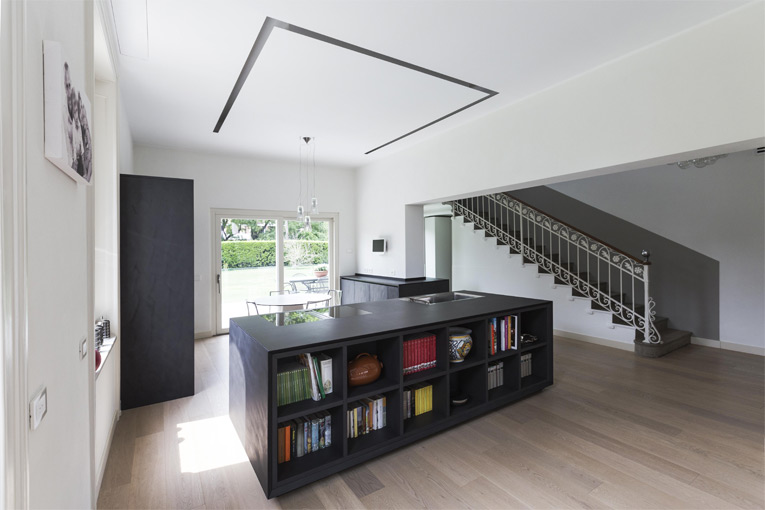
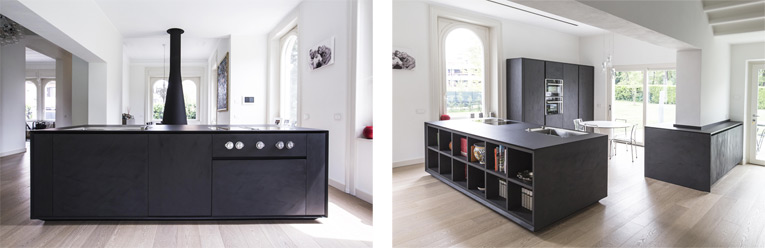
Realization in Varese, ONE kitchen in black concrete.
Mix & Match
Don’t just leave one thing in a dark tone. Make sure something else in the room matches the dark cabinets, floor or walls. Even if it’s a minor detail like a work of art, the countertop or the baseboard, you want to tie in the color and make it look like a complete picture.


Rifra Store Milano, ONE kitchen in black concrete with concrete dividing walls.
If you have decided to use a darker color for your upcoming kitchen renovation or new build, don’t let the naysayers get you down. Yes, it’s a little bit trickier than its lighter counterparts, but when you get it right, it’ll be so worth it. Keep comparing and contrasting colors, materials and finishes until you find the perfect combination for you.
Laura Spinelli

PS: If you want to receive all news about our kitchens please visit our website http://www.rifra.com/en/index.aspx or follow us on our social pages:
https://www.facebook.com/RifraMilano/
https://www.instagram.com/riframilano/



Leave a Reply